10-Day Adventure to Danakil, Tigray & Omo Valley
Overview
Embark on the ultimate expedition through Ethiopia’s most extraordinary landscapes and ancestral territories. This 10 Day Ethiopia Tour is a thrilling blend of extreme terrains and rich heritage, taking you from the volcanic fires of the Danakil Depression to the ancient rock-hewn churches of Tigray and the vibrant tribes of the Omo Valley. Designed for the intrepid traveler, this 10 Day Ethiopia Tour ensures a deep dive into the nation’s diverse natural and cultural wonders with expert-led logistics and authentic encounters.
What To Expect
Your expedition begins with a morning flight to Semera (ET-110 departure @06.45a.m), the gateway to the Danakil. Upon arrival, you will meet your professional crew for a briefing before beginning the drive into the volcanic desert.
We stop at the Afdera salt lake for lunch and a refreshing float in its saline waters. In the late afternoon, we reach the base camp at Dodom. After an early dinner, we trek to the caldera to witness the dramatic glow of Erta Ale’s molten lava lake under the starlit sky. Overnight will be camping in Askoma base camp under the sky!
- Drive hours: 5hrs
Experience a spectacular sunrise at the crater rim before descending back to base camp for breakfast. We then drive through the shifting desert sands to reach the remote Afar settlement of Hamad Ela.
Along the way, you will witness the legendary Afar salt miners harvesting blocks by hand and traditional camel caravans. The day concludes with a stunning sunset over the vast Danakil landscape. Overnight will be in camping Ahmedila base camp under the sky!
- Drive hours: 5hrs
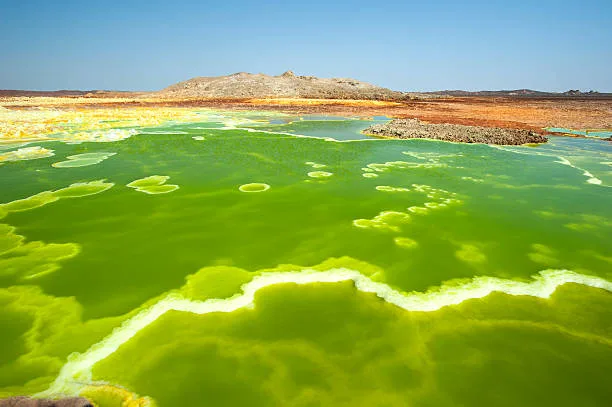
This morning, we visit the otherworldly Dallol Hydrothermal Field. You will explore a surreal landscape of neon-colored acidic pools and mineral formations, situated at 125m below sea level—one of the hottest inhabited places on Earth.
After a scenic lunch, we depart the lowlands and ascend into the Tigrayan highlands, arriving in Mekele by late afternoon. Overnight will be in Amdna hotel.
- Drive hours: 6hrs
The second phase of our journey begins as we drive toward Adigrat. We start a three-hour trek through the high-altitude farmlands and local villages of Tigray, arriving at the Enaf Guesthouse. Here, you will experience the legendary hospitality of the highland people and take in panoramic mountain views. Overnight will be in Enaf community guest house.
- Drive hours: 2.30hrs
Today features a full-day trek across the magnificent Gohagot Valley. We stop to explore the ancient Mariam Bahra Church and keep a keen eye out for highland wildlife, including Gelada baboons and soaring eagles. We spend the night at the Shimbreyti Community Guesthouse, high above the valley floor.
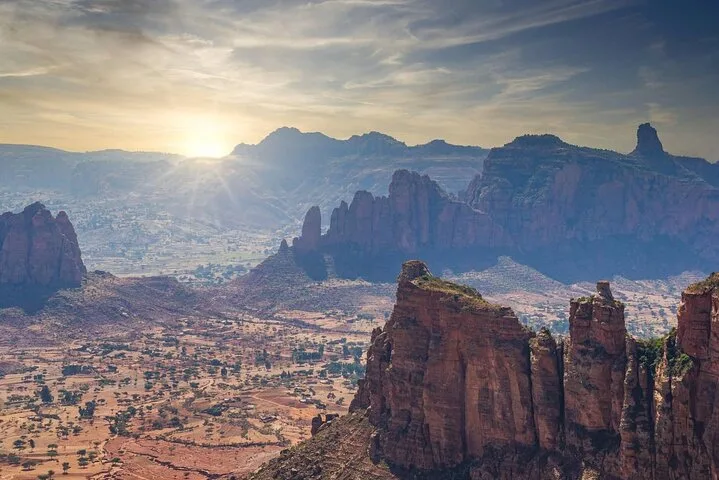
We descend through rural villages to meet our vehicle for the drive to Gheralta. The highlight of the day is a climb to Abune Yemata Guh, a church perched precariously on a vertical cliff. Navigating narrow ledges and rock faces leads to an unforgettable spiritual and architectural experience. Overnight will be in Vission hotel Hawzein.
- Drive hours: 2hrs
We return to Mekele, visiting the 4th-century architectural masterpiece of Abrha We Atsbeha en route. We also explore the historic palace of Emperor Yohannes IV before catching an afternoon flight back to Addis Ababa (ET- 261, departure @17:30p.m) for a comfortable evening in the capital. Overnight will be in Aya hotel.
- Drive hours: 2hrs
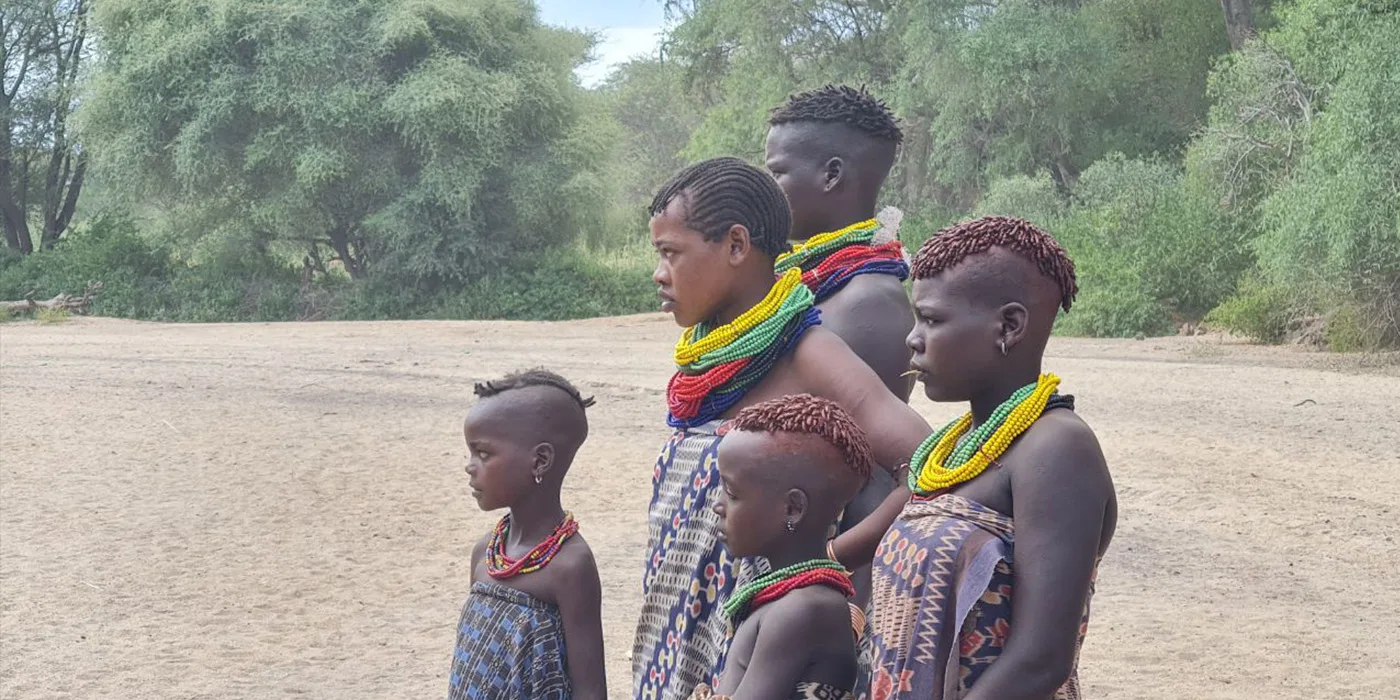
We fly south to Jinka and enter the Omo Valley (ET- 271 departure @06:05p.m). We drive to Turmi, the heartland of the Hamar people, known for their ochre-colored hair twists and intricate beaded leather. If scheduled, we will witness the sacred Bull-Jumping ceremony, a vital rite of passage in Hamar culture. Overnight will be in Buska Lodge.
- Drive hours: 3hrs
In the morning, we visit the Karo tribe at Korcho village, overlooking the Omo River. They are masters of elaborate body painting and ritual adornment. In the afternoon, we travel to Omorate to cross the Omo River by dugout canoe and visit the Dassanech people to learn about their unique semi-nomadic lifestyles. Overnight will be in Buska Lodge.
- Drive hours: 4hrs
On our final morning, we visit the Mursi people, famous for the clay lip plates worn by the women. We then catch our return flight from Jinka to Addis Ababa (ET-270, departure @14:00 p.m). The tour concludes with a grand farewell dinner featuring traditional music and cultural dance performances.
- Drive hours: 4hrs
What's included
- Professional English-speaking local guide
- Private 4WD or tourist vehicle with driver, including fuel
- Accommodation as per the itinerary
- Meals as per the itinerary
- All entrance fees to the sites listed in the itinerary
- Airport and hotel transfers
- Bottled drinking water during the tour
- Government taxes and service charges
What's not included
- International flights, and domestic flights unless stated in the itinerary
- Ethiopian visa (an e-visa can be obtained online)
- Travel and medical insurance
- Tips for the guide and driver
- Alcoholic and soft drinks
- Personal expenses and laundry
- Camera and video fees at sites, unless stated in the itinerary
- Any services not mentioned under What's Included
Frequently Asked Questions
What is the best time to visit Ethiopia?
The best time to visit Ethiopia is during the dry season, which runs from October to April. During this time, the weather is pleasant, and transport/roads are in excellent condition.
Do I need a visa to travel to Ethiopia?
Yes, most nationalities require a visa to enter Ethiopia. You can conveniently apply online for an eVisa prior to your arrival, or obtain a visa on arrival at Addis Ababa Bole International Airport.
What is included in the tour price?
Our tours generally cover all ground transportation, professional guiding services, accommodation, and entrance fees. Please refer to the specific tour's Inclusions/Exclusions section for complete details.
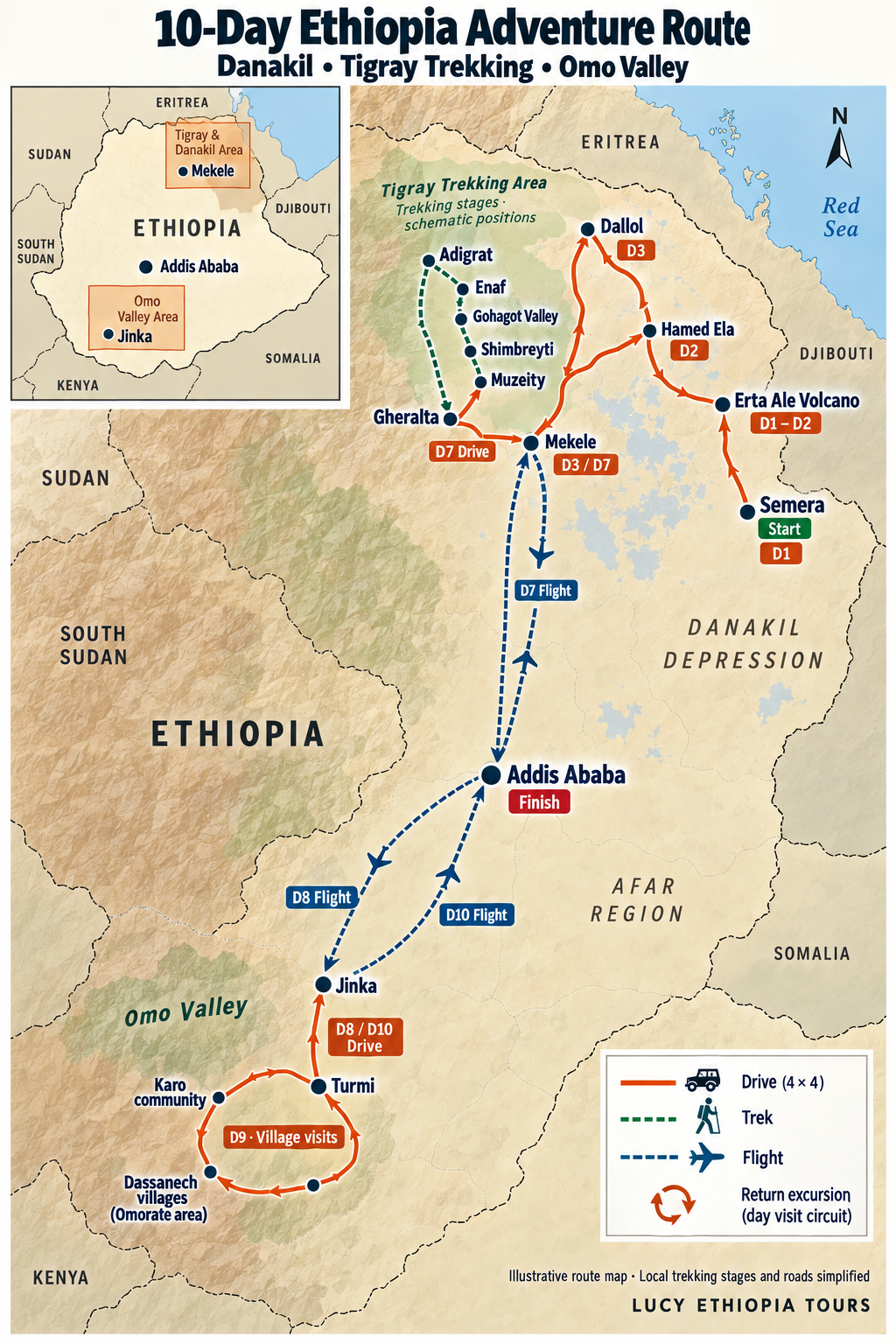
Route Map
Proudly Community-Owned
The communities visitable in this area are warm and friendly. If you would like to support them directly, small donations are highly appreciated:
- Pens and school supplies
- Books
- Used clothes
- Children's items
- Any useful materials you feel may benefit the local community