12 Days Ethiopia Adventure: Omo valley, Lalibela, Danakil & Gheralta trekking

Overview
12-Day Ethiopia Adventure | Omo, Lalibela, Danakil & Gheralta: Book a 12-Day Ethiopia Adventure across South Omo Valley tribes, Lalibela's rock-hewn churches, Danakil Depression volcanoes, and Gheralta cliff churches.
Welcome to the ultimate Ethiopian expedition—a thrilling journey that bridges the raw power of Earth’s untamed forces with ancient human heritage. Over 12 unforgettable days, you will cross the dramatic spectrum of Ethiopia’s landscapes, from the vibrant, high-altitude energy of Addis Ababa to the surreal, neon-colored hydrothermal fields of the Danakil Depression. Feel the heat of the earth beside the bubbling lava lakes of Erta Ale, stand in awe before the legendary rock-hewn churches of Lalibela, and climb into the soaring sandstone peaks of the Gheralta mountains. Your journey culminates in the heart of the Omo Valley, offering a profound window into the living traditions and rich cultural tapestries of the region’s diverse tribes. This is not just a tour; it is a deep immersion into a land of dramatic contrasts, timeless history, and breathtaking natural wonders.
What To Expect
Welcome to the historic capital of Ethiopia. Upon arrival at Bole International Airport, you will be met by our professional team and transferred to your hotel.
Our city tour highlights the diverse heritage of Addis Ababa, including a visit to the National Museum—home to the world-famous “Lucy” fossil—and the architectural grandeur of Holy Trinity Cathedral. We will explore the panoramic vistas from Entoto Park and the vibrant atmosphere of the Merkato, Africa’s largest open-air market, before concluding the evening with a traditional dinner and live cultural music. Overnight will be in Aya hotel.
We depart the capital for Arba Minch (ET-171, Departure @ 08:05 am), the gateway to the southern Rift Valley and the morning begins with a private boat trip on Lake Chamo, where you will encounter massive crocodiles, hippos, and diverse birdlife.
In the afternoon you will visit to the Dorze village, perched high in the Chencha Mountains. You will witness their unique bamboo beehive huts and learn about their world-renowned weaving traditions and unique local cuisine made from Enset. Overnight in Arba Minch in Haile resort.
On this date you will continue to Konso, a UNESCO World Heritage site, to explore their ancient fortified villages and unique wooden “waga” statues. The day concludes with a drive to Turmi, the heartland of the Hamar people, where you may have the opportunity to witness a sacred bull-jumping ceremony. Overnight will be in Buska lodge.
We visit the Karo tribe at Korcho village, overlooking the Omo River. They are masters of elaborate body painting and ritual adornment about their semi-nomadic lifestyle on the banks of the river.
In the afternoon, we drive toward Jinka, stopping at the vibrant Key Afer Market if scheduled, to observe the trade and interaction between the Banna, Ari, and Hamar tribes. Overnight will be in Eco Omo lodge.
Today we visit the Mursi people, famous for the elaborate clay lip plates worn by the women and their intricate body art. After engaging with the community, we explore the South Omo Research Center Museum in Jinka for deeper cultural context and take an afternoon flight back to Addis Ababa (ET-270, departure @14:00 p.m) and overnight will be in Aya hotel.
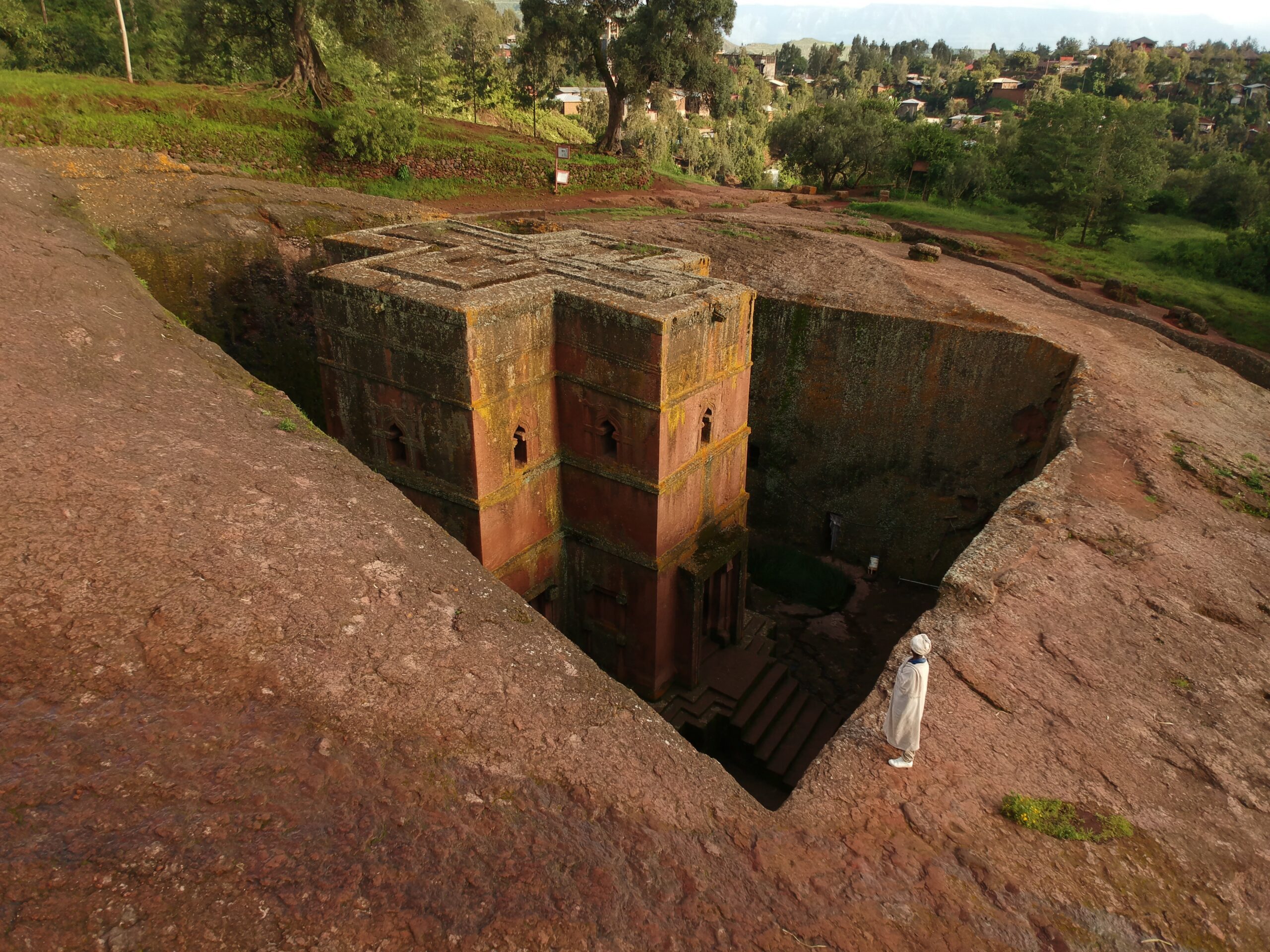
A short flight (ET-120, Departure @11:45 am) brings us to Lalibela, the “New Jerusalem.” The afternoon is dedicated to the first group of rock-hewn churches, including the towering Bet Medhane Alem and the beautifully decorated Bet Maryam.
The day culminates at the iconic, cross-shaped Church of St. George (Bet Giyorgis), a masterpiece of medieval Christian architecture carved entirely downward into solid volcanic rock. Overnight will be in Top ten hotel.
In the morning, we explore the second group of churches, including the fortress-like Bet Gabriel-Rufael and the finely detailed Bet Amanuel. These sacred sites remain active centers of Ethiopian Orthodox faith.
In the afternoon, you fly back to Addis Ababa (ET-121, Departure @13:30 pm). Overnight: Aya Addis Hotel.
We transition to the extreme landscapes of the north with a flight to Semera (ET-110, Departure @06:45 am). Our 4WD expedition enters the Danakil Depression, one of the lowest and hottest places on Earth.
We arrive in the remote settlement of Hamed Ela and spend the evening at Lake Asale, witnessing a spectacular sunset over the vast salt flats. Overnight camping under the desert stars.
The morning is spent exploring Dallol, a hydrothermal field of neon-colour acidic pools and mineral formations situated 125m below sea level.
In the afternoon, we traverse the lava desert to reach the base of Erta Ale. After dinner, a short trek brings us to the caldera rim to witness the raw, glowing power of the world’s most famous active lava lake. Overnight: Open-air camping at Erta Ale.
Following an early morning descent from the Erta Ale volcano base camp, we revisit the rim of the active lava lake (conditions permitting) to witness its raw power in the daylight.
We then begin our four-hour drive toward the highlands, leaving the desert heat behind as we arrive in the vibrant city of Mekele for a well-deserved evening of comfort. Overnight in Amdna hotel.
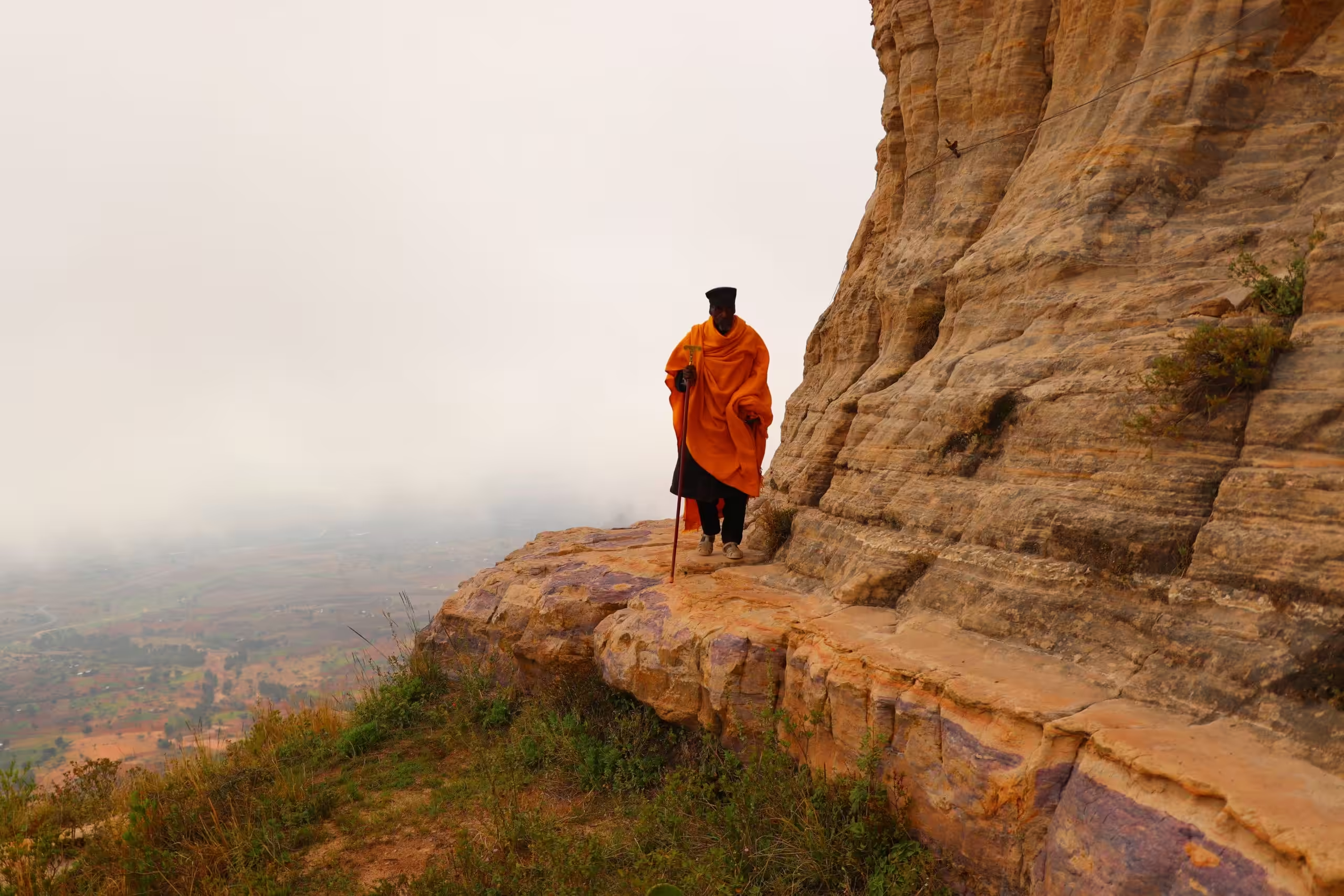
We drive into the Gheralta region, famous for its sandstone spires. The highlight is a challenging hike to Abune Yemata Guh, a church perched precariously on a vertical cliff face featuring ancient frescoes.
We continue to the Shimbreyti Community Guest House, where you will experience authentic Tigrayan hospitality and search for endemic Gelada baboons in the surrounding cliffs. Overnight in Shimbreyti community guest house.
Our final morning features a scenic return drive to Mekele. We then catch an afternoon flight back to Addis Ababa (ET-263, Departure @17:25 pm).
You will have free time for last-minute souvenir shopping at the Merkato or to relax before our team transfers you to Bole International Airport for your evening international departure.
What's included
- All airport transfers
- All accommodations mentioned in the itinerary
- Breakfasts
- Private transportation with fuel and experienced driver
- Professional English-speaking guide throughout the trip
- Local guides and scouts where required
- Entrance fees and permits
- Boat trip fees
- Danakil Depression excursion with camping equipment
- Security escort and permits
- Bottled water during excursions
- Cultural visits and community experiences
- All Lalibela churches entrance fees
- Mago national park fees
- All domestic flights mentioned in the itinerary
What's not included
- Alcoholic drinks
- Lunch and dinners
- Tips and gratuities
- Personal expenses
Packing Essentials
- Light backpack for walking
- Trekking or comfortable walking shoes
- Light clothes for hot desert areas
- Warm clothes for cool evenings and highlands
- Hat or cap
- Sunglasses
- Sunscreen cream
- Power bank
- Electrolytes
- Flip-flops or sandals
- Towels
- Swimming suit
- Snacks
- Personal medications
- Camera and spare batteries
- Any personal items you may need during the trip
Frequently Asked Questions
What is the best time to visit Ethiopia?
The best time to visit Ethiopia is during the dry season, which runs from October to April. During this time, the weather is pleasant, and transport/roads are in excellent condition.
Do I need a visa to travel to Ethiopia?
Yes, most nationalities require a visa to enter Ethiopia. You can conveniently apply online for an eVisa prior to your arrival, or obtain a visa on arrival at Addis Ababa Bole International Airport.
What is included in the tour price?
Our tours generally cover all ground transportation, professional guiding services, accommodation, and entrance fees. Please refer to the specific tour's Inclusions/Exclusions section for complete details.
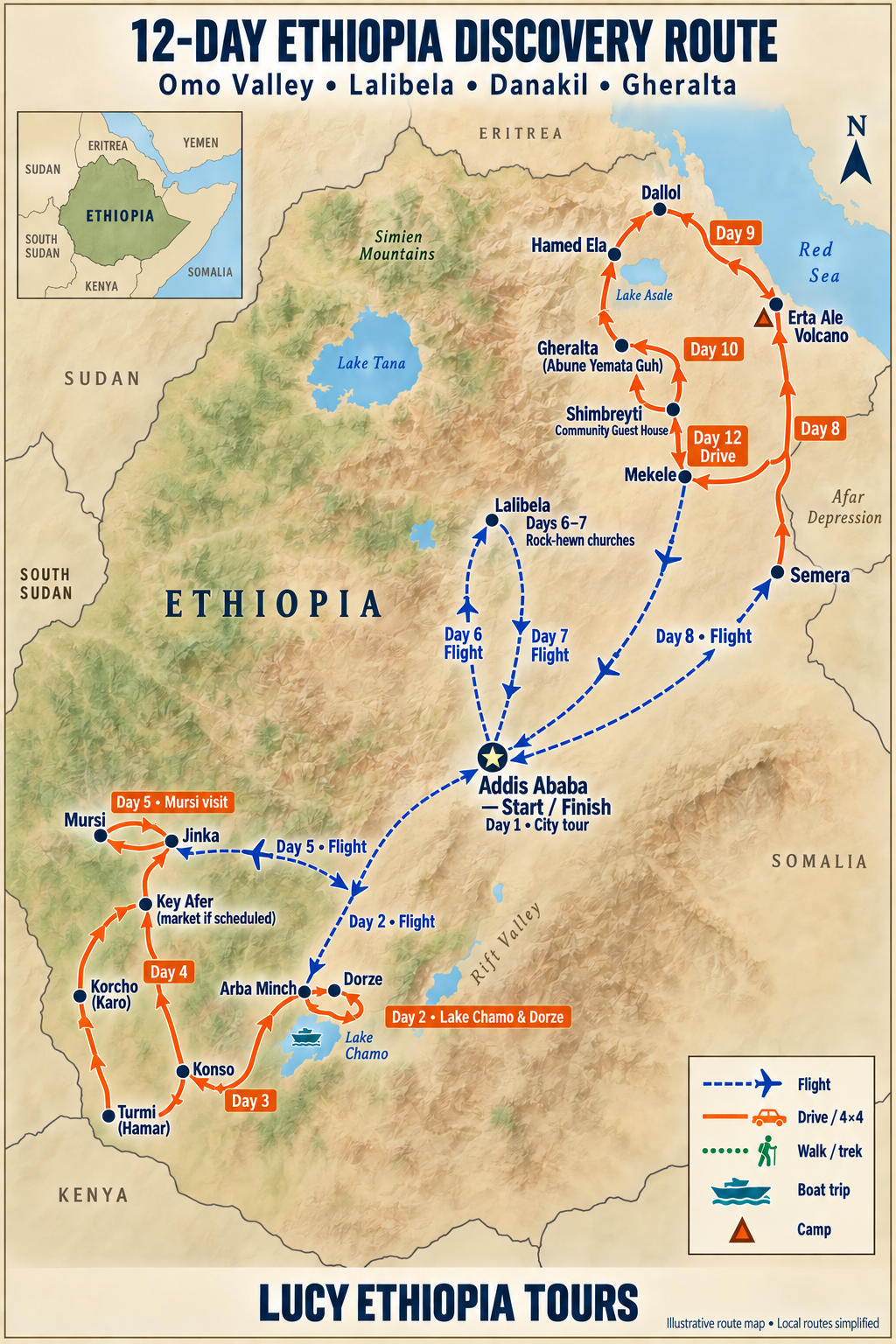
Route Map
Proudly Community-Owned
The communities visitable in this area are warm and friendly. If you would like to support them directly, small donations are highly appreciated:
- Pens and school supplies
- Books
- Used clothes
- Children's items
- Any useful materials you feel may benefit the local community