14-Day Itinerary for South Ethiopia and Harar
Overview
14-Day Omo Valley and Harar Tour | South & East Ethiopia: Experience southern and eastern Ethiopia on a 14-Day Omo Valley and Harar Tour. Witness Hamar ceremonies, cruise Lake Chamo, and explore walled Harar Jugol.
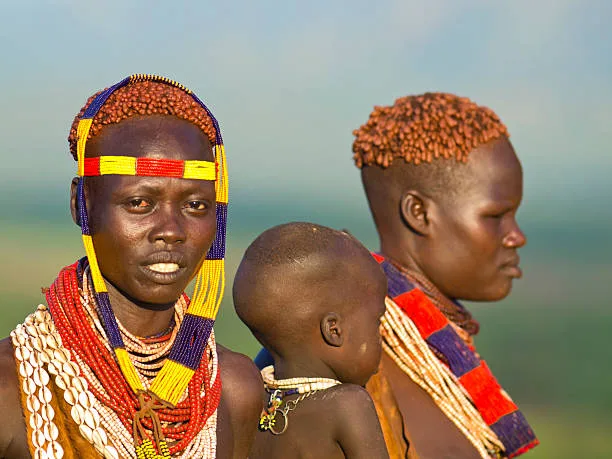
Embark on the ultimate 14-day Ethiopia adventure, a deeply immersive journey through the nation’s southern cultural heartland and the legendary eastern walled city of Harar. This 14-Day Omo Valley tour & Harar Cultural Expedition is expertly designed for travelers seeking a profound connection to diverse landscapes and ancestral stories. From the vibrant tribal traditions of the Hamar and Mursi in the Omo Valley to the spiritual pulse of Harar’s ancient Islamic shrines, this guided tour offers an authentic blend of anthropology, wildlife, and history. Experience seamless logistics and respectful interactions as you discover the living heritage of Ethiopia’s most iconic remote regions on this comprehensive and unforgettable grand tour.
What To Expect
Welcome to the historic capital of Ethiopia. Upon arrival at Bole International Airport, you will be met by our professional team and transferred to your hotel.
Our city tour highlights the diverse heritage of Addis Ababa, including a visit to the National Museum—home to the world-famous “Lucy” fossil—and the architectural grandeur of Holy Trinity Cathedral. We will explore the panoramic vistas from Entoto Park and the vibrant atmosphere of the Merkato, Africa’s largest open-air market, before concluding the evening with a traditional dinner and live cultural music. Overnight will be in Aya hotel.
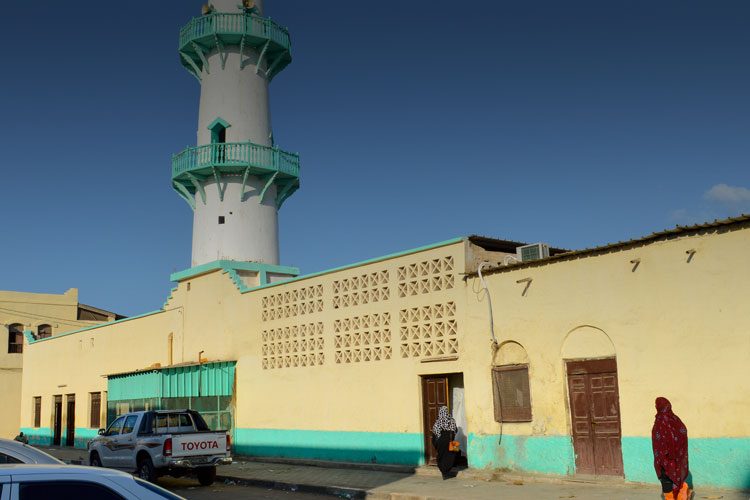
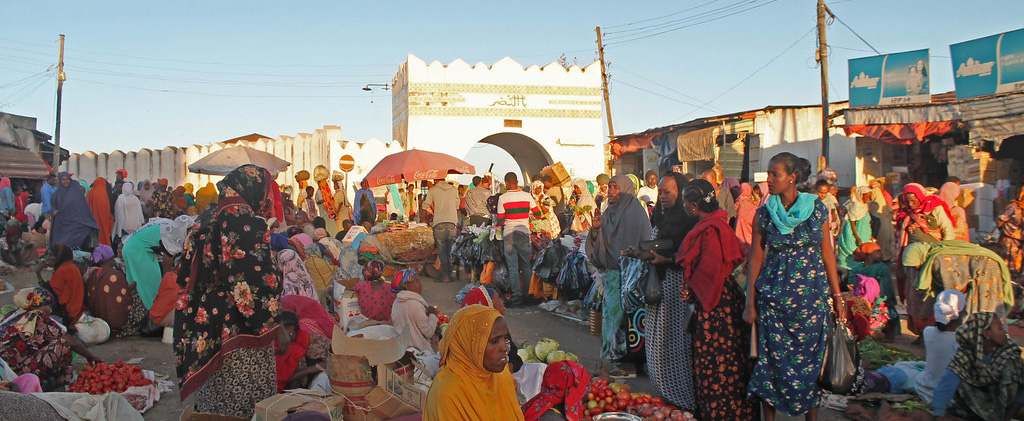
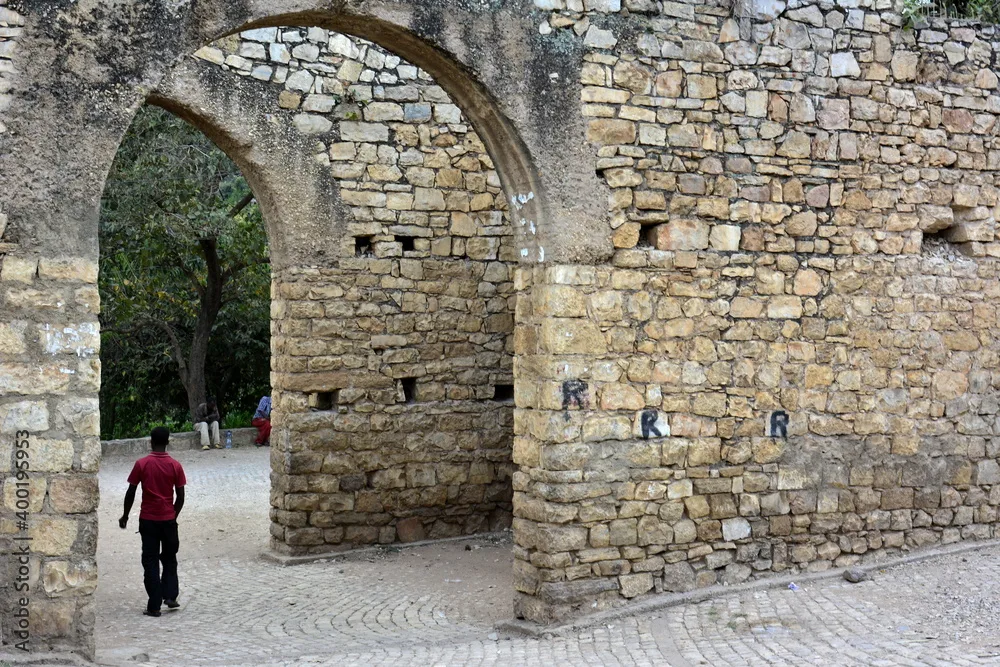
Your expedition begins with a morning flight from the capital to Dire Dawa (ET-206, departure @06:55am). Upon arrival, we drive to the ancient walled city of Harar. Our afternoon exploration includes visits to Arthur Rimbaud’s House, the Harari Museums, and the historic residence of Ras Mekonnen.
To conclude our first day, we participate in the legendary evening tradition: the hyena feeding spectacle, where local “hyena men” summon and feed these wild predators by hand at the city gates. Overnight: Wenderland Hotel.
After a morning visit in Harar for a scenic drive through the Aweday town, stopping at sprawling coffee plantations and chat fields that characterize the region’s agriculture and boat trip over the Haremaya lake.
In the afternoon drive back to Diredawa and fly back to Addis (ET-223 departure @06:25pm). Overnight: Aya hotel.
You will fly from the capital to Arbaminch (ET-273, Departure @12:00 pm). Our destination is Arba Minch, but first, we ascend the Chencha Mountains to visit the Dorze people. Known for their expert weaving and unique bamboo beehive huts, the Dorze offer a fascinating introduction to Ethiopia’s mountain cultures. Overnight: Haile Resort.
You will drive and visit the Chamo lake with boating for watching different bird species and the biggest African Crocodile and your journey continues toward stopping at Konso, a UNESCO World Heritage site. We explore the ancient stone-walled fortified villages and learn about their unique social structures and “Waga” funerary statues and overnight will be in Kanta Lodge Konso.
After breakfast, you will set out on a drive towards Jinka, the administrative town of the Omo Valley tribes. You will reach Jinka, where you will visit the Ari people. The Ari tribe is known for their pottery, beekeeping, and local beer-making traditions. You will have the opportunity to observe their daily lives, interact with the community, and gain insight into their unique cultural practices. Overnight: Jinka Resort or Eco Omo Lodge.
In the morning, you will embark on a two-hour drive through Mago National Park to reach the Mursi tribe, one of the most famous ethnic groups in the Omo Valley. The Mursi women are known for their distinctive clay lip plates, a sign of beauty and cultural identity. You will spend the day immersing yourself in their traditions, observing their lifestyle, and engaging with the community. This extended visit allows for an authentic and uninterrupted experience. Overnight: Jinka Resort or Eco Omo Lodge.
After breakfast, you will journey towards Turmi, a three-hour drive through the Omo Valley. Along the way, you will visit the Banna (well known as stilts boys walking) and Hamar tribes, each with their own unique customs. The Banna people are known for their elaborate hairstyles, while the Hamar tribe is famous for their body adornments and the renowned bull-jumping ceremony, a rite of passage for young men.
If your visit coincides with a tribal market day, you will have the opportunity to witness one of these vibrant gatherings, where different tribes come together to trade goods and socialize. Overnight: Buska Lodge.
In morning, we travel further south to Omorate, situated near the Kenyan border. We cross the Omo River by traditional dugout canoe to visit the Dassanech tribe, observing their unique semi-nomadic village life and resilient pastoralist traditions.
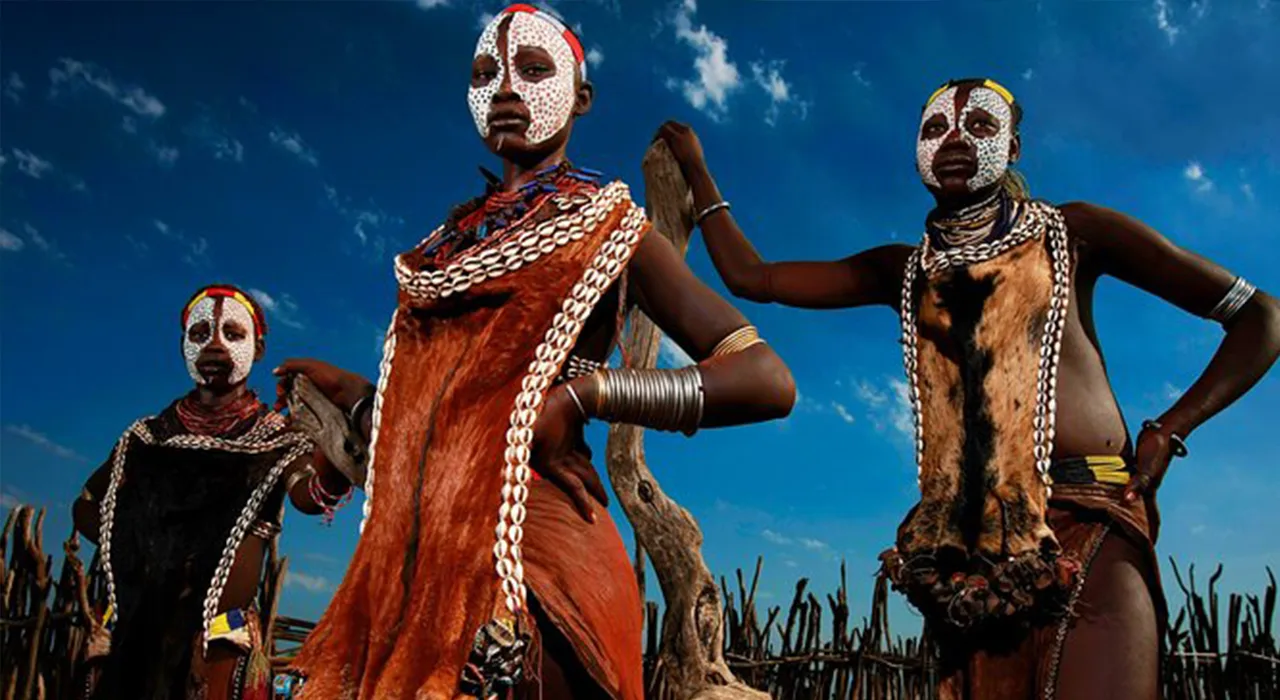
In afternoon, we visit the Karo tribe at Korcho village, perched on a cliff overlooking the Omo River. The Karo are masters of elaborate body painting and ritual adornment.
Returning to Turmi in the afternoon, we visit a Hamar village. If scheduled, we may have the rare opportunity to witness a sacred bull-jumping ceremony, a vital rite of passage for young Hamar men. Overnight in Buska lodge.
We depart for Yabelo, crossing the territory of the Erbore and Borena tribes. The Erbore are known for their distinct jewelry and colorful head coverings.
In the afternoon, we reach Yabelo to visit the “Singing Wells.” Here, Borena pastoralists form human chains to haul water from deep wells for their livestock, singing rhythmic songs that keep the pace of the arduous work. Overnight in Yabelo.
Our route turns north toward the lakeside city of Awassa. Situated on the shores of Lake Awassa, the city offers a tropical Rift Valley atmosphere.
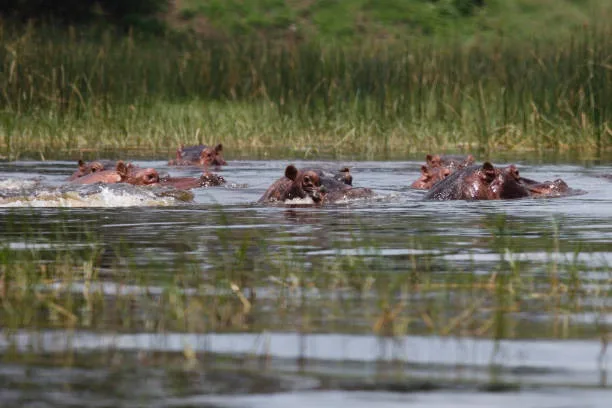
We visit the famous morning fish market, where local fishermen bring in their catch amidst a flurry of activity and spectacular lakeside birdlife. We conclude the day with a relaxing boat ride on the lake to spot hippos. Overnight in Haile resort Hawassa.
We depart for the world-renowned Bale Mountains National Park. Our first stop is the park headquarters at Dinsho, where we take a guided walk through the juniper forests.
This area is excellent for spotting endemic mammals such as the Mountain Nyala and Menelik’s Bushbuck, as well as several highland bird species. The crisp mountain air and ancient forests provide a stark contrast to the lowlands. Overnight at Nurobe Hotel.
We spend a full day exploring the high-altitude Sanetti Plateau, the best place in the world to see the rarest canid on Earth: the Ethiopian Wolf.
As we traverse this Afro-alpine moorland, we will marvel at the unique flora, such as the Giant Lobelia, and summit Mount Tulu Dimtu. At 4,377 meters, it is Ethiopia’s second-highest peak and offers breathtaking panoramic views. Overnight at Nurobe Hotel.
After relaxed morning you will fly back to Addis Ababa (ET-176, departure @11:20 am). Upon arrival in Addis Ababa, you will be transferred to your hotel or directly to Bole International Airport for your international departure, marking the end of your Ethiopian expedition. It will be the end of the trip!
What's included
- Professional English-speaking local guide
- Private 4WD or tourist vehicle with driver, including fuel
- Accommodation as per the itinerary
- Meals as per the itinerary
- All entrance fees to the sites listed in the itinerary
- Airport and hotel transfers
- Bottled drinking water during the tour
- Government taxes and service charges
What's not included
- International flights, and domestic flights unless stated in the itinerary
- Ethiopian visa (an e-visa can be obtained online)
- Travel and medical insurance
- Tips for the guide and driver
- Alcoholic and soft drinks
- Personal expenses and laundry
- Camera and video fees at sites, unless stated in the itinerary
- Any services not mentioned under What's Included
Frequently Asked Questions
What is the best time to visit Ethiopia?
The best time to visit Ethiopia is during the dry season, which runs from October to April. During this time, the weather is pleasant, and transport/roads are in excellent condition.
Do I need a visa to travel to Ethiopia?
Yes, most nationalities require a visa to enter Ethiopia. You can conveniently apply online for an eVisa prior to your arrival, or obtain a visa on arrival at Addis Ababa Bole International Airport.
What is included in the tour price?
Our tours generally cover all ground transportation, professional guiding services, accommodation, and entrance fees. Please refer to the specific tour's Inclusions/Exclusions section for complete details.
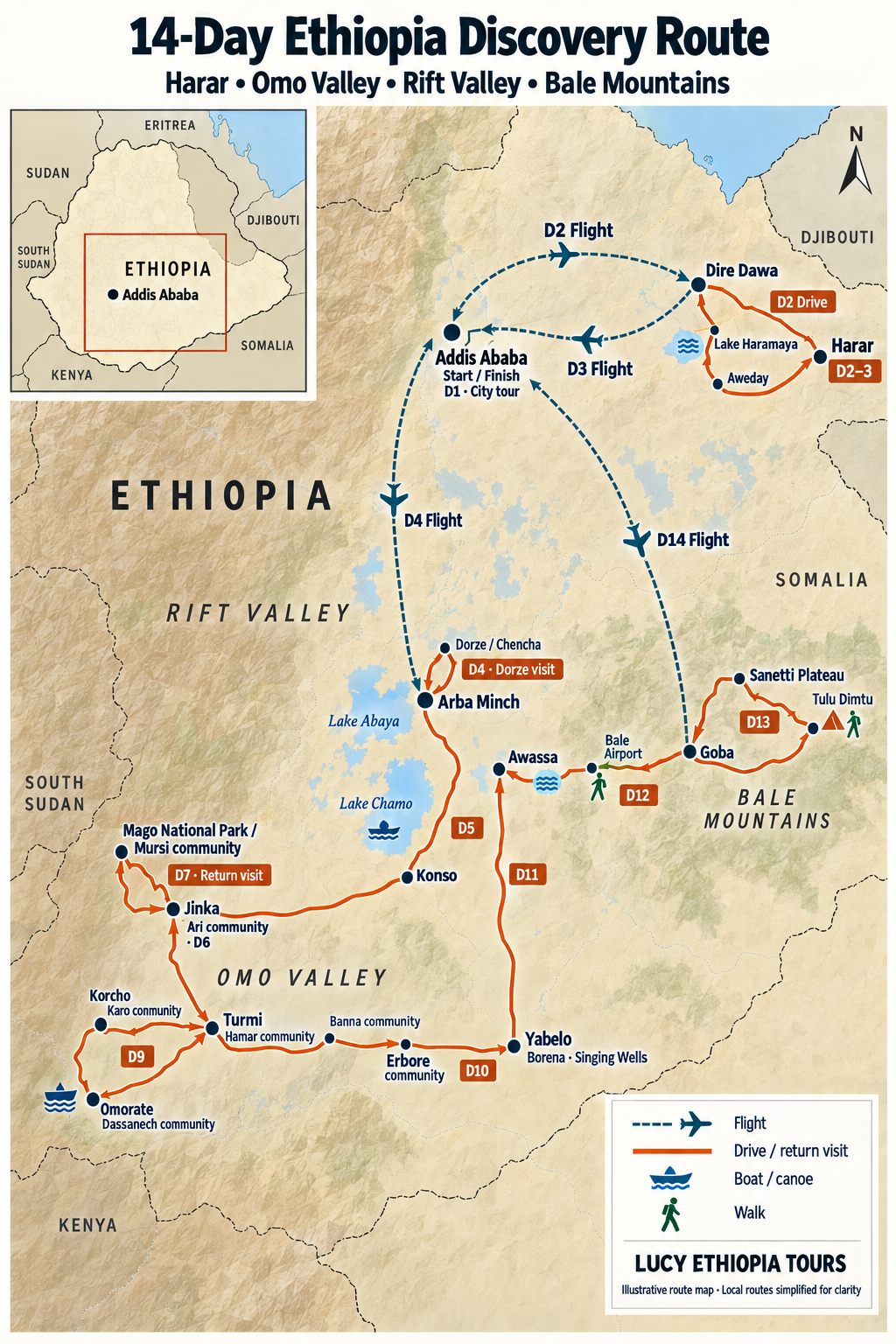
Route Map
Proudly Community-Owned
The communities visitable in this area are warm and friendly. If you would like to support them directly, small donations are highly appreciated:
- Pens and school supplies
- Books
- Used clothes
- Children's items
- Any useful materials you feel may benefit the local community